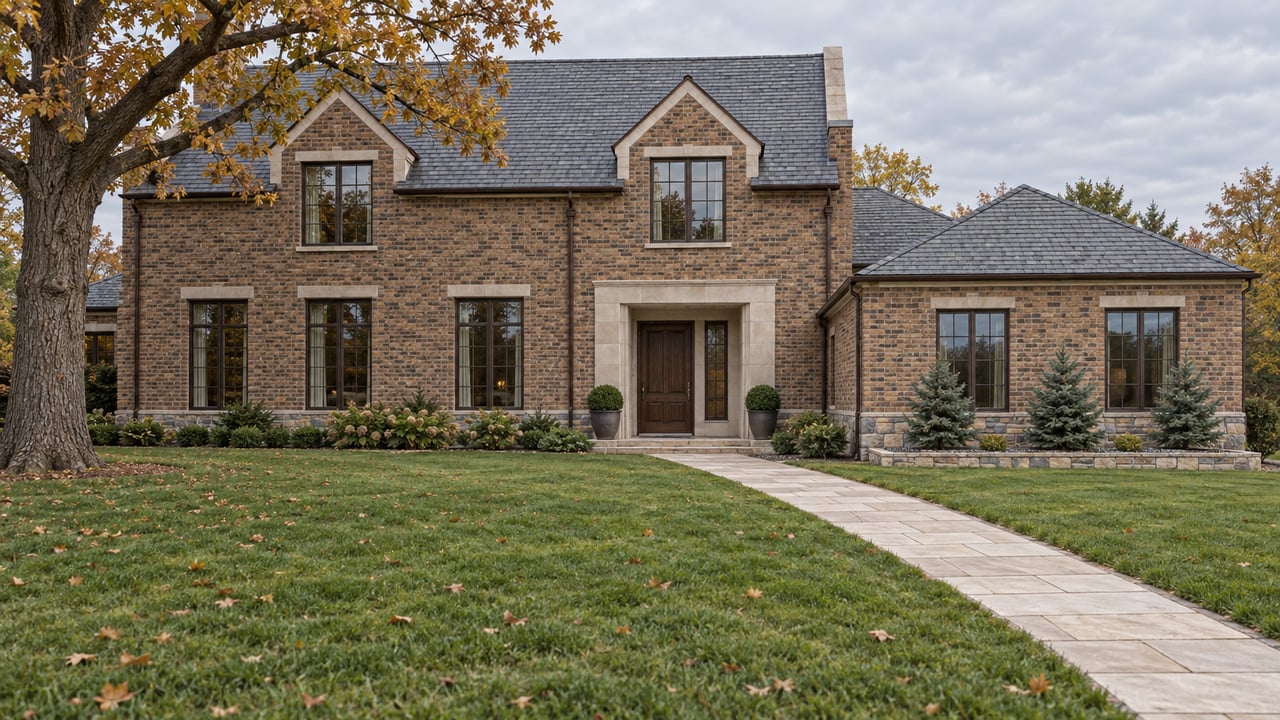
In Cherry Hills Village, the Next New Home Is Usually an Old One
October 22, 2026
October 22, 2026
From January through August 2026, Cherry Hills Village issued 6 permits for new homes and 94 for additions and remodels. That works out to about 16 renovations for every house built from the ground up. The renovations also carried more money. They totaled about $29.6 million in project valuation, compared with about $20.3 million for the new residences, according to the Community Development Department's August 2026 month-end report presented to City Council on September 15.
For a buyer comparing Cherry Hills Village with other south-metro options, that ratio matters more than any median price. Most of what is new in the village is an older house that someone rebuilt from the inside. That puts the real decision in the condition, history and expansion room of whatever house is already on the lot.
The city's report compares the first eight months of 2026 with the same eight months of 2025.
| Permit type, Jan. through Aug. | 2025 | 2026 | Change |
|---|---|---|---|
| New home permits | 2 | 6 | +200% |
| Remodel/addition permits | 74 | 94 | +27% |
| All permits issued | 591 | 652 | +10% |
The building department's monthly exhibit adds dollar figures. It lists $20,252,350 in project valuation across the six new residences, about $3.4 million per house. The 94 addition and remodel permits come to $29,612,352, about $315,000 per project on average. A new house here is a multimillion-dollar construction commitment. A remodel costs a fraction of that, and the village is doing far more of them.
The pace has been steady enough that the city has budgeted for it. In June, City Council added $50,000 for planning support services. Ordinance 5, Series 2026 says "building permit activity has continued to rise," which means more reviews to check projects against the zoning code.
Remodels might matter less if new lots were opening up. They aren't. In December 2025, the city adopted an emergency ordinance, Ordinance 7, Series 2025, that paused the acceptance and processing of new subdivision applications. The pause covers sketch plats, preliminary plats, final plats, amended plats and minor subdivisions.
The ordinance gives a narrow reason. The city's subdivision rules require developers to dedicate land, or pay cash in lieu of land, for open space, parks, trails and other public facilities. That requirement dates to 2004, and the city wanted to check whether it still fits current needs. In March, council appropriated $40,880 for a nexus study of those requirements by the consulting firm TischlerBise.
The original pause was set to expire September 10, 2026. In August, staff asked council for four more months to finish the study and process any code changes. The August 4 council packet also reported that there were no pending subdivision applications and that staff had not spoken with any prospective applicants. The extension, Ordinance 7, Series 2026, runs the moratorium through January 4, 2027.
The one recent lot split shows how rare these requests are. In May, council approved splitting the 4.9-acre parcel at 1 Cherry Hills Park Drive into two lots, BusinessDen reported, creating room for one more home. According to the May 5 council minutes, the request had been continued from earlier hearings and largely restored a two-lot layout that existed in 1997. Even the newest buildable lot in the village was mostly an old one coming back.
The moratorium does not affect permits for building on existing lots, so new-home and remodel permits kept coming through 2026. But no new subdivided land is in the pipeline. Whatever a buyer finds here in the coming months will sit on a lot that already exists, and usually under a house that already exists.
Two of the five most expensive home sales in the Denver metro in August were in Cherry Hills Village, according to the Denver Post's roundup of August closings. Neither was new construction.
A third sale reported that month sat at a different price point. A six-bedroom, 7,000-square-foot Cherry Hills Village home sold August 20 for $3.7 million, BusinessDen reported. The seller had bought it for $3.3 million in 2023.
The Woodie Hollow sale is the clearest case of the 2026 permit pattern. A late-1980s house, rebuilt from the frame, sold at a price that put it among the most expensive homes sold in the metro that month. It is "new" in every way a buyer would notice except the original structure and the lot.
Time on market varied widely, too. The Old Cherry Hills house went under contract in about a week, and Woodie Hollow took just over two months. For comparison, DMAR's September 2026 market report puts the metro-wide median at 19 days for detached homes priced at $1 million and up, against 32 days for the market overall. At this level, each house sells on its own timeline, and how far along its renovation is plays a large part in that.
If an older house is what you will be buying, what the village allows you to do with it matters as much as the asking price. The city's posted New Construction and Major Addition Requirements set out several points that affect that math.
These rules change the value of a house that needs work. Where the house sits relative to its district's floor-area limit determines how much it can grow. Once a project crosses the 50% threshold, the neighbors get a meeting before the city sees an application, and that step belongs in any timeline. A smaller remodel that stays under the threshold follows a simpler process. The 2026 permit data suggests that is how much of the village is choosing to work.
The handout carries a June 2024 revision date. In 2025, the city adopted the 2024 editions of the international building, residential and fire codes through Ordinance 4, Series 2025. Confirm the current requirements with the city's Community Development Department before you set a budget or schedule. This post is general information, not legal or financial advice, so check your own situation with the right professionals.
One more local decision is pending. Voters in the November 3, 2026 coordinated election will consider a Home Rule Charter amendment "affirming the City's home rule authority over local land use and zoning," referred by Ordinance 8, Series 2026. The city's September 15 council agenda packet lists it as ballot question 2C. In its supporting resolution, the city names two state laws it views as conflicting with local plans and codes, HB24-1152 on accessory dwelling units and HB24-1313 on housing in transit-oriented communities. Whatever the outcome, the question concerns who sets land-use rules, and those rules shape how much an existing lot can hold.
Can I buy a lot in Cherry Hills Village and subdivide it? Under Ordinance 7, Series 2026, the city's pause on new subdivision applications runs through January 4, 2027, while it reviews its land-dedication and fee-in-lieu requirements. What happens after that depends on what the council adopts.
Are people still building new houses here? Yes, but there are few of them. The city issued six new-home permits from January through August 2026, up from two in the same months of 2025.
What should I look at first in an older listing? Start with the build year, the renovation history and how much expansion room the floor-area limit leaves. Those three facts tell you whether the house fits as it stands, needs a remodel under the major-addition threshold, or is headed for a neighborhood meeting.
I've worked through this kind of analysis on my own historic restorations and scrape-and-build projects. If you're weighing a house here that needs work, I'm happy to walk through it with you and the contractors you'd rely on. Let's Connect with Don Preisser.
Stay up to date on the latest real estate trends.
CHFA Schools To Home
Boulder Housing Market Trends, Home Prices, and What Buyers and Sellers Need to Know

Why Home Buyers Are Moving to the Colorado Front Range
Whether you're purchasing your first home, selling a luxury property, relocating to Colorado, or expanding your investment portfolio, you'll receive honest advice, responsive communication, and personalized support from start to finish.